
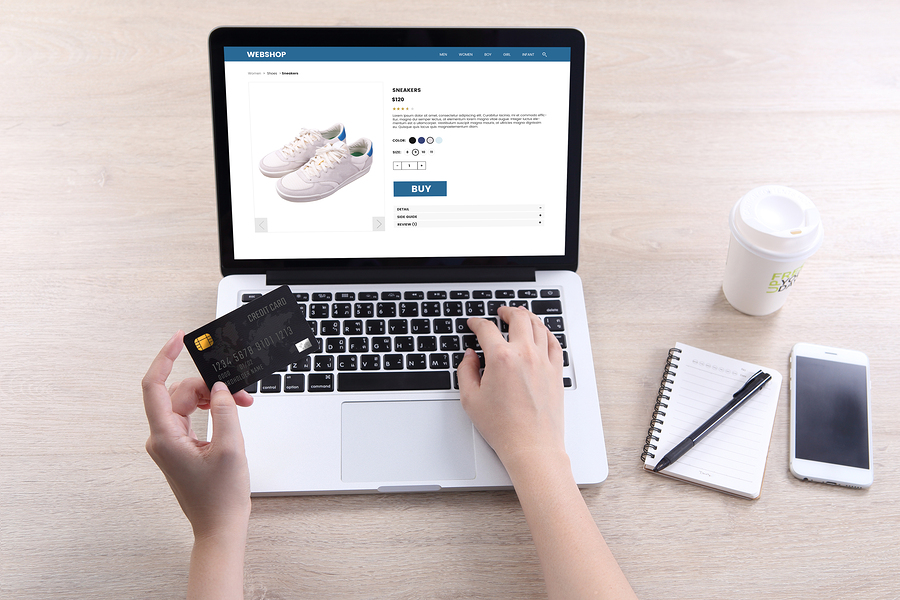
E-commerce has completely transformed the way we shop. With mobile apps and websites, we can easily buy the things we need (or want) from anywhere, at any time. When our hands get tied, we can ask Alexa or Google to order for us. And, for the most part, we can count on those orders to be at our door within a few days, or ready for in-store pickup within a few hours.
As online retailers continue to simplify shopping and speed up shipping, e-commerce is rising and thriving. So will online sales ever peak?
The numbers say “no”
E-commerce sales have been steadily climbing for more than a decade. Online sales in North America grew by 16% in 2018, accounting for $500 billion. And the number of consumers in the U.S. and Canada who made monthly online purchases totaling $100 or more went up by 61% last year, adding up to a spending total of $220 million.
On a global level, 1.92 billion people, or about 25% of the world’s population, are expected to buy online this year. Worldwide online sales amounted to $1.34 trillion five years ago and have grown exponentially since. According to predictions, that number will quadruple by 2021, reaching $4.88 trillion.
Physical stores still steal the most sales
As online sales soar, one might wonder if e-commerce will ever eclipse offline sales. Online purchases contributed to 10% of total retail sales in 2018 and may reach over 15% by 2022. Beyond that, it’s hard to say how large that share will grow and whether e-commerce sales will eventually surpass in-store sales.
At this stage, brick-and-mortar stores still have plenty to offer. Some customers prefer to review and compare products online, demo the items in the store, and then buy from the channel with the best deal. And for emergency product needs, stopping by a local store is still the fastest way to secure an item, even though it may cost more than ordering online.
Physicals stores are doing their part to remain competitive. Retailers are using smart strategies like mobile checkout and buy online, pick up in store (BOPIS) to merge the benefits of ordering online with in-store visits. As long as brick-and-mortar stores continue to adapt alongside the advancement of e-commerce, we won’t see them disappear any time soon.
Overcoming a few barriers might speed up e-commerce
Though the e-commerce experience has been improving over the years, it’s not without its challenges. Customers want their items faster, and retailers are fighting to keep up with the demand by increasing courier vehicles and exploring automated and drone delivery options. Package theft is also a growing concern — a third of Americans have had orders stolen or know of someone who has. (Check out some of our recommendations for preventing package theft.)
These logistical issues haven’t noticeably impeded the growth of online shopping. But as the future of package delivery unfolds, emerging solutions to these challenges could further accelerate e-commerce sales.
Looking for a sure way to boost e-commerce sales? Check out Smiota’s smart package lockers for BOPIS orders.