The post More Than Storage: How Smart Lockers Are Strengthening Campus Security appeared first on Smiota.
]]>This combination often results in overcrowded mailrooms, misplaced packages, and limited control over who accesses stored items. These aren’t just operational inefficiencies but genuine security concerns.
Smart lockers are emerging as a practical solution to these challenges. While often seen as a convenience feature, they are quickly becoming an essential part of modern campus security by introducing structure, control, and accountability.
The Security Gaps in Traditional Campus Systems
Traditional campus storage and delivery systems rely heavily on manual processes. Staff members are responsible for receiving, sorting, and distributing large volumes of packages daily. Under such pressure, errors are almost inevitable.
Packages can be misplaced, handed over to the wrong person, or left unattended in shared spaces. In many cases, there is no reliable way to track where things went wrong. The lack of a proper audit trail makes it difficult to investigate issues or assign accountability.
Common gaps include:
- Limited tracking of package movement
- Unauthorized access to storage areas
- High dependency on staff availability
- Increased chances of human error during peak times
These vulnerabilities highlight the need for a more structured and secure system.
What Makes Smart Lockers “Smart”?
Smart lockers bring automation and digital intelligence into what was traditionally a manual process. They use secure authentication methods such as PIN codes, QR codes, or RFID-enabled ID cards to ensure that only authorized users can access specific compartments.
Once an item is placed in a locker, the intended recipient is instantly notified with access details. This removes the need for manual coordination and reduces delays. More importantly, every interaction, whether it’s delivery, access, or retrieval, is automatically recorded in a digital system.
Key capabilities include:
- Controlled, user-specific access
- Instant notifications for pickups
- Automated logs for every transaction
- Integration with campus systems and apps
These features work together to create a system that is not only efficient but also highly secure and transparent.
Key Ways Smart Lockers Strengthen Campus Security
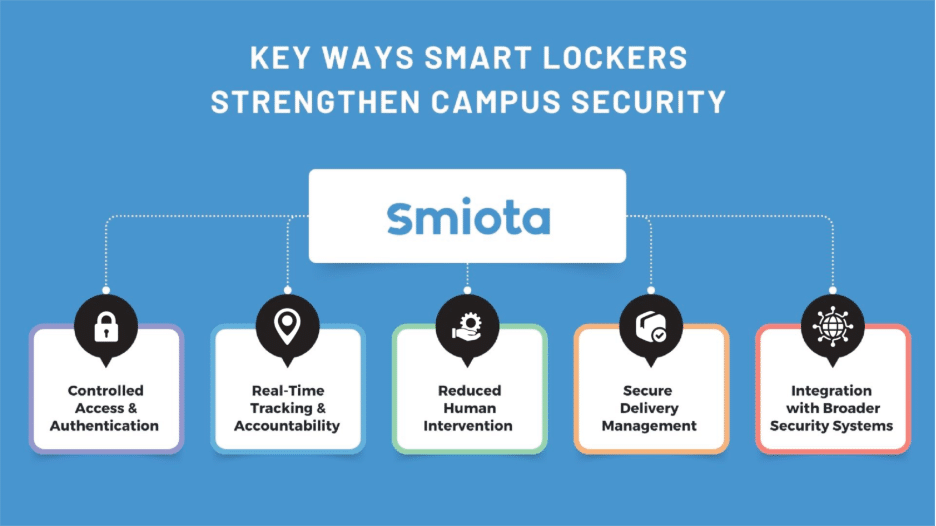
Controlled Access & Authentication
One of the most significant advantages of smart lockers is their ability to restrict access. Unlike traditional storage areas, where multiple people may have entry, smart lockers ensure that only the intended recipient can open a specific compartment. This eliminates ambiguity and significantly reduces the risk of unauthorized access or theft.
Real-Time Tracking & Accountability
Every interaction with a smart locker is recorded and time-stamped, creating a clear digital trail. This level of visibility allows administrators to track the exact journey of a package from delivery to pickup. In case of disputes, this data becomes invaluable, enabling quick resolution and improved accountability.
Reduced Human Intervention
By automating the handling process, smart lockers reduce the need for manual involvement. Staff no longer need to manage every package directly, which minimizes the chances of human error. It also reduces internal risks associated with mishandling or miscommunication.
Secure Delivery Management
With smart lockers, delivery personnel can securely deposit packages into designated compartments without needing staff assistance. This ensures that items are not left unattended or exposed to theft. In many ways, this system addresses the campus equivalent of “porch piracy,” providing a safe and reliable last-mile delivery solution.
Integration with Broader Security Systems
Smart lockers do not operate in isolation. They can be integrated with existing campus infrastructure such as surveillance systems and access control platforms. This creates a more cohesive security environment where multiple systems work together to enhance visibility and control.
Use Cases Beyond Package Delivery
While package management is the most common application, smart lockers serve multiple purposes across campus. Their flexibility makes them a valuable asset in different departments and scenarios.
For instance, libraries can use lockers to facilitate contactless book pickups and returns, reducing queues and ensuring secure handling. IT departments can streamline the distribution and collection of devices like laptops, maintaining a clear record of asset movement. Similarly, lockers can be used to store lab equipment, ensuring that only authorized individuals can access sensitive materials.
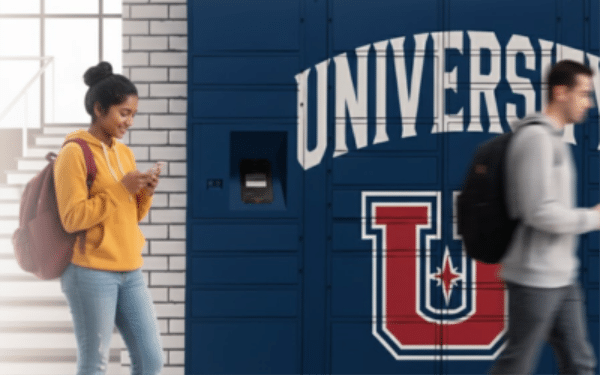
Additional use cases include:
- Contactless food delivery on campus
- Temporary storage for students and staff
- Secure exchange of documents or materials
This versatility makes smart lockers more than just a delivery solution – they become a shared infrastructure for secure access.
Impact on Campus Safety Culture
The adoption of smart lockers has a broader impact beyond operations. It influences how safety is perceived on campus. When students and staff know that their belongings are stored securely and can only be accessed by them, it builds a sense of trust in the system.
It also introduces a culture of accountability. Since every interaction is recorded, users become more conscious of their actions. This transparency reduces misuse and encourages responsible behavior.
Over time, these systems contribute to a more secure and organized campus environment. They also signal that the institution is investing in modern, technology-driven solutions to enhance safety and convenience.
Implementation Considerations for Universities
Implementing smart lockers requires thoughtful planning to maximize their benefits. Placement plays a crucial role and lockers should be installed in accessible yet secure locations such as residence halls, libraries, and academic buildings.
Equally important is integration with existing campus systems. A seamless connection with ID cards, mobile apps, and IT infrastructure ensures a smooth user experience. Universities should also consider scalability, ensuring that the system can expand as demand grows.
Other key considerations include:
- Ensuring user awareness and easy onboarding
- Providing clear instructions for use
- Addressing data privacy and security requirements
A well-executed implementation ensures that both security and usability goals are met.
Final Thoughts: Why Universities Are Turning to Smarter Locker Solutions
As campuses evolve, so do their security challenges. Traditional systems are no longer sufficient to handle the scale and complexity of modern university operations. Smart lockers offer a practical solution by combining security, efficiency, and convenience into a single system.
They strengthen campus security by:
- Restricting access to authorized users
- Creating a transparent audit trail
- Securing deliveries and shared resources
Solutions like Smiota lockers are helping universities take this step forward. With advanced access control, seamless integration, and scalable deployment options, Smiota enables institutions to modernize their infrastructure without added complexity.
For universities aiming to create safer, smarter campuses, smart lockers are no longer optional but an essential part of the security ecosystem. Learn more about how Smiota lockers can enhance student and staff experience in your university by talking to one of our locker experts.
The post More Than Storage: How Smart Lockers Are Strengthening Campus Security appeared first on Smiota.
]]>The post Why Modern Apartment Residents & Students Now Expect Smart Package Lockers as Standard Amenities appeared first on Smiota.
]]>This shift isn’t just a trend – it’s the direct result of evolving lifestyles. More people work from home or hybrid schedules, online shopping continues to surge, and students and young professionals expect technology that supports convenience, security, and independence.
Property managers across the U.S. now face unprecedented package volume.
Smart lockers, especially full-service systems like Smiota are quickly becoming a must-have amenity in multifamily housing, student residences, and mixed-use properties.
In this article, we explore why residents now expect smart lockers, how they reshape convenience, and why installing them can dramatically improve resident satisfaction and operational efficiency.
The Lifestyle Shift: More Deliveries Than Ever Before
To understand why smart lockers are now essential, we must look at how resident behavior has changed.
E-commerce has exploded
Residents order nearly everything online:
- Clothing
- Groceries
- Meal kits
- Pharmacy items
- Household goods
- Electronics
- Gifts
This trend is even stronger among students and younger renters.
Food & grocery subscriptions are the new norm
Weekly meal kits and monthly subscription boxes have made temperature-sensitive deliveries common, and these require secure, predictable storage.
Hybrid work = irregular schedules
Residents aren’t always home when packages arrive. They need 24/7 access, not office-hour pickup.
Package theft has increased
“Porch piracy” has become a real problem in apartments and open-access buildings.
Staff are overwhelmed
Property staff spend hours each day:
- Sorting packages
- Logging deliveries
- Calling residents
- Managing lost items
- Handling complaints
Smart lockers eliminate this drain on staff time.
This is the new reality, and buildings without modern package management are falling behind.
How Smart Lockers Solve Resident Pain Points Instantly
Smart lockers aren’t “nice to have.” They solve five major lifestyle problems.
24/7 Pickup – Convenience Residents Now Expect
Traditional package rooms require:
- Staff oversight
- Office hours
- Manual sorting
Smart lockers eliminate all of this.
Residents receive:
- A text
- A mobile app alert
- Or an email
with a secure pickup code.
They retrieve packages:
- Before work
- Late at night
- On weekends
- On holidays
- Whenever they want
This freedom is a major selling point for renters and students.
Theft Prevention Is Non-Negotiable
Residents want certainty that their packages won’t disappear.
With more deliveries, the risks have grown exponentially.
Smart lockers provide:
- Steel construction
- Anti-tamper design
- Logged access
- Secure QR/PIN entry
- Individual compartments
This level of security is impossible with a traditional mailroom.
No More Waiting Rooms or Queues
One of the most common frustrations:
“I came home after work and had to wait 15 minutes because the office was busy.”
Smart lockers eliminate this entirely.
Pickup takes less than 10 seconds.
- No staff
- No queues
- No stress
Temperature-Controlled Lockers Support Modern Lifestyles
Smiota’s temperature-controlled lockers store:
- Groceries
- Frozen meal kits
- Fresh produce
- Pharma prescriptions
- Health supplements
This is exactly what younger renters and students order regularly.
This feature alone can distinguish a building or student residence from older competitors.
Accessibility for All Residents
Lockers offer independence for:
- Shift workers
- International students
- Residents with mobility challenges
- Busy parents
- People working late hours
Everyone benefits – not just the tech-savvy.
Benefits for Property Managers & Building Operations
Smart lockers do more than delight residents – they massively streamline operations.
Reduced Staff Workload
Staff usually spend 1–3 hours daily managing packages.
With smart lockers:
- Couriers deliver directly to lockers
- System logs everything
- Residents retrieve independently
- Staff get hours back daily for actual resident service.
Improved Resident Satisfaction & Retention
Buildings with smart lockers report:
- Higher renewal rates
- Better online reviews
- Faster lease conversions
Renters now view lockers as essential, not luxury.
Competitive Advantage in Leasing
Prospective residents specifically ask:
“Do you have package lockers?”
“Do you have refrigerated lockers?”
If the answer is no, many walk away.
Amenities influence leasing decisions and smart lockers have become a deciding factor.
Eliminates Mailroom Overload
Traditional mailrooms struggle with:
- Overflowing parcels
- Lost packages
- Wrong deliveries
- Privacy complaints
Smart lockers automate the entire workflow and preserve order.
Supports Student Housing at Scale
Student housing faces:
- Heavy delivery volume
- High theft risk
- Constant move-ins and outs
- Minimal staff availability
Smart lockers:
- Reduce mailroom chaos
- Support student schedules
- Minimize loss/theft
- Improve campus experience
Universities nationwide are adopting lockers to modernize campus logistics.
Why Smiota Smart Lockers Stand Out
Smiota’s system differentiates itself through:
Cloud-Based LockerOS
Manages:
- Real-time locker usage
- Notifications
- Access logs
- System health
- Temperature levels
Multiple Locker Types
- Standard parcel
- Refrigerated
- Freezer units
- Outdoor-rated lockers
- Modular configurations
Enterprise-Grade Security
Every action is logged and traceable.
Flexible Integrations
Compatible with:
- Property management software
- University mailrooms
- Building access systems
- Retail delivery systems
Scalable Design
Easily expand locker banks as delivery volume grows.
Smiota’s versatility makes it ideal for any residential or educational property.
Conclusion: Smart Lockers Are No Longer Optional – They Are Expected
Modern residents demand:
- Convenience
- Security
- Flexibility
- Digital access
- Contactless solutions
Smart lockers deliver all of these.
In apartments, condos, and student housing, they are no longer an upgrade. They’re a necessity.
Properties that embrace this infrastructure will attract and retain more residents while significantly reducing staff workload and operational chaos.
The post Why Modern Apartment Residents & Students Now Expect Smart Package Lockers as Standard Amenities appeared first on Smiota.
]]>The post Dorm Improvements Every College Student Is Looking For appeared first on Smiota.
]]>College is an exciting time of possibility and discovery. Each semester, students flock to campuses to expand their minds and challenge their discipline. The pandemic, of course, has shifted things drastically. Some aspects of a “normal” college experience will never be the same. Even so, we are learning to adjust and adapt to the dynamics of public health in a face-paced world. Students are back to in-person learning. And with that – students’ lives unfold on campus and in their dorm rooms.
Dorm life is a common element of higher education. A positive or negative dorm experience can massively impact an individual’s capacity to learn and retain their experience.
With all of this in mind, it’s important to constantly be seeking improvements and adjusting systems to better meet the needs of today’s students. Here are some dorm improvements that every college student is looking for. By investing in some of these improvements, a college and campus will be more competitive and successful.
Functionality
Students need things to work well. This is basic. It stretches from door handles and key cards to bathroom showers, wifi, and mail delivery. With each year, students’ tech fluency and expectations regarding functionality, sustainability, and efficiency grow. These needs and desires are spread out across a wide spectrum based on individuals’ contexts and areas of study. Regardless, the old dorm rooms of the 1970s undoubtedly need to upgrade to today’s current climate of learning. Students look for dorms that are functional and efficient.
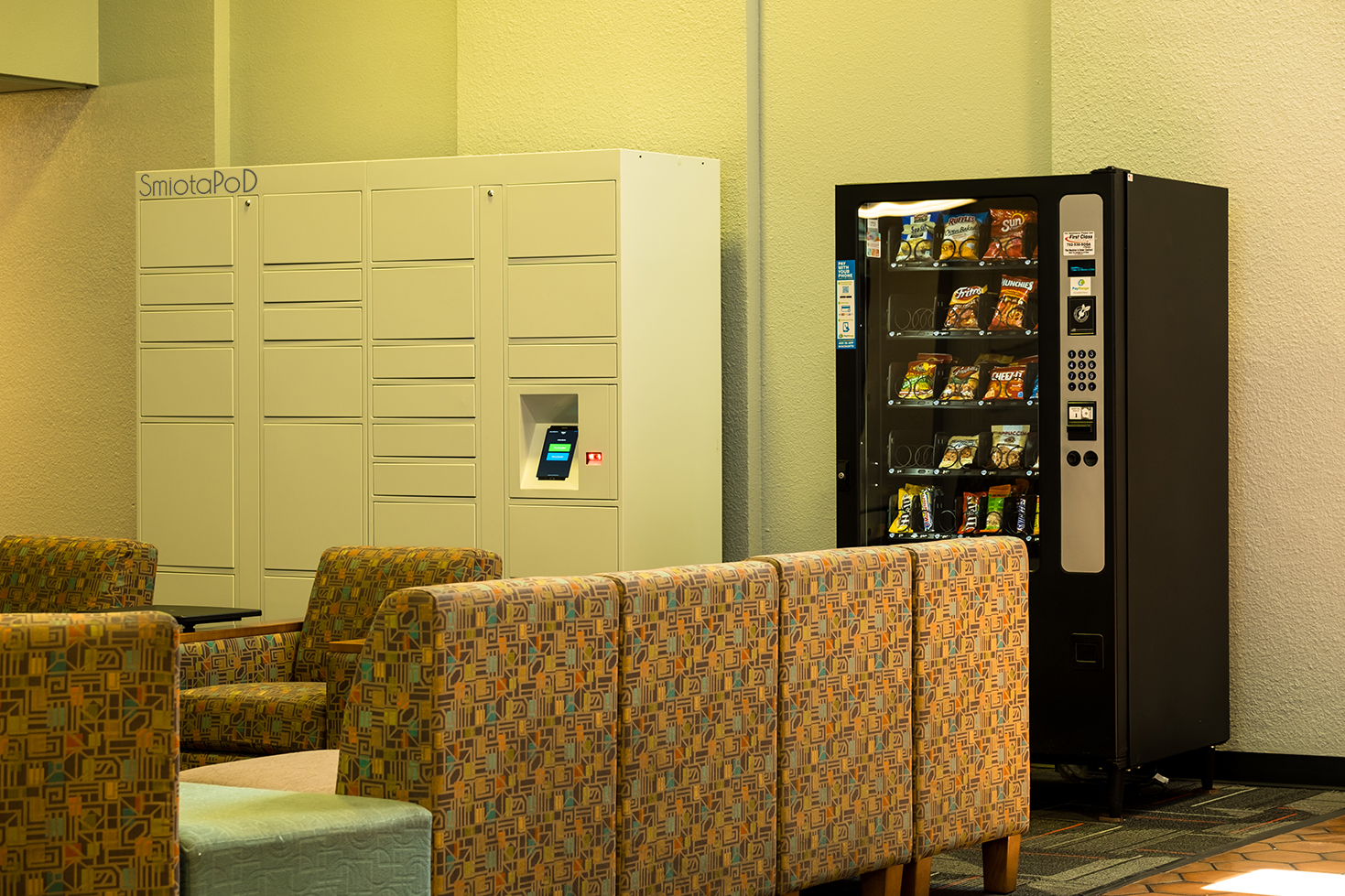
One idea that is gaining particular traction in college dorm settings is the implementation of smart lockers. These lockers utilize smart technology in a progressive way. They are quick and easy to use. Smart lockers minimize wait time. They can be accessed 24/7 depending on a student’s schedule. Instead of relying on the mailroom, swamped with people at particular hours in the day, students can use smart lockers to come and go in manners ideal for their specific schedule.
Additionally, smart lockers are already being used on campuses as ways to redistribute food to students who might be struggling with hunger. One hopes that reforms around higher education and predatory loan programs will be effective immediately. In the intermittent time, a functioning building can help to mitigate some pressures from students’ day-to-day needs.
Cleanliness
While students might not have the same expectations of cleanliness as older generations, many students do look for and appreciate cleanliness in their dorms. This is something dorms can improve upon, particularly in the common areas that are popular study zones and community use spaces. Maintaining cleanliness can look many different ways. Often, a dorm will need to employ staff to keep bathrooms, study areas, and shared kitchens clean. This is not easy work, and these employees should be paid a living wage in order to stay aligned with the ethos of what higher education represents. This is an ongoing conversation on campuses around the country.

Community Use Spaces
And speaking of community use spaces, this is another thing that many students look for in their dorm buildings! It’s not a shocker. Young people flock to university and college campuses to get an education. They also embark on an intensive social journey. Students are often at a time in their life where they will form deep friendships, work partnerships, and mayabe even fall in love. Orchestrating a building that promotes learning should also emphasize comfortable and collaborative spaces for minds to meet and collaborate.
Safety
In the past years, our conversations around campus safety have evolved considerably. Headlines, investigative reporting, living art installations and protests, and books such as John Krakauer’s Missoula shine the light on the ways we need to reform campus safety.
It’s not just clickbait, however. Students are organizing and reimagining what safety looks like for them. They are putting pressure on campus officials to meet basic security requirements and implement systems of accountability and restoration, particularly around sexual assault.
All of this impacts what college students look for in a dorm. And it’s an invitation for universities to make dorm improvements that both protect and empower the people living in them.
Cameras in public areas and hallways are one idea. Free and accessible training and workshops are another. Consistent peer presence and student leadership presence can make a difference. And then there are the basics: functioning locks, quick key replacement, smart lockers – all of these seemingly “little things” make a space more secure. Therefore, they are foundational in creating an environment of safety. This is so important in cultivating a healthy learning environment and a culture that promotes young adults into their future.
The post Dorm Improvements Every College Student Is Looking For appeared first on Smiota.
]]>The post Efficiency: College Bookstores and Smart Lockers appeared first on Smiota.
]]>
College Bookstores – A Campus Hub
A college bookstore is a hub on campus. This is the place where books, materials, information pass between various community members. For students, it is the first stop – even before class – on their learning journey of a particular topic. It is critical that this experience is an efficient, empowering process in order to better facilitate learning. For colleges, the bookstore is an integral element to the overall business of running a school.
Smart lockers facilitate these various needs. Firstly, they speed up wait times. Secondly, they improve organizational systems. Thirdly, 24-7 locker availability means the store is more adaptable to any schedule. Let’s break down what this might look like in real life:
In other industries, smart lockers have greatly reduced wait times. This is a big shift for workers and customers alike. For instance, in a study of mailrooms, smart lockers reduced line wait times from a long string of minutes to mere seconds. Staff members will be able to better allocate their time. They can focus on the elements of their work that require creativity and are more fulfilling for meaningful business advancements. This, instead of being stressed by fussy logistics and out-of-date systems. Busy students, balancing a hectic schedule will gain precious minutes, too.
Additionally, in the industry of multi-family apartment complexes, smart lockers make it so that people can retrieve their deliverable items at any time of day, regardless of their busy schedules. This can, of course, be applied to a college campus and a college bookstore specifically. It further accommodates hectic schedules, heavy loads, and the chaotic lifestyle of young people endeavoring to become experts in their field.

Efficiency And Accessibility: How It Looks
Whenever we are improving our college environments, efficiency and accessibility need to be at the forefront for administrators, officials, and building managers. This is how colleges stay competitive and facilitate the best learning environment possible.
Smart lockers can improve the college bookstore systems of pick up and delivery. These systems facilitate, improve, and streamline the return process. Lockers can also be used to meet the needs of students in sharing materials. They improve the renting process at the library. Smart lockers can help to meet desperate needs like student food insecurity. All these ideas link back to smart locker use in the college bookstore – and throughout the learning community. When our systems are as efficient and accessible as possible, we can do the real work: learning about our human condition. We can explore the phenomena that surround us to better move into the future.
The post Efficiency: College Bookstores and Smart Lockers appeared first on Smiota.
]]>The post Education is Changing: Building a Smart Campus appeared first on Smiota.
]]>We are living in a time when tech fluency for students, teachers, and staff has never been more important. Building, updating, and cultivating a smart campus is critical in maintaining school reputations. A smart campus draws talented minds to a particular learning community. This is how a campus stays competitive.
What A Smart Campus Looks Like
A smart campus combines systems upgrades with a forward-facing ethos. Namely, sustainability and minimized carbon footprint while empowering learning in an equitable manner.
A smart campus is made up of a mosaic of factors to create a humming whole. The initiatives are as diverse as the learning environments.
For instance, the University of Texas Austin runs on the largest microgrid in the USA. Boston University is working on an open cloud platform. Over at the University of Michigan, there is a public-private partnership between the university and the city of Ann Arbor. In this partnership, there is community cultivation of public transportation – including driverless vehicles. They’ve also implemented an electric shuttle.
These are big ideas that not only change the face of a campus but also shift the way cities and societies might function. This is one of the great boons of education institutions: at their best, they lead the way into the future.
This leadership looks a lot of different ways. And just as important as the massive, groundbreaking technologies are, it’s the structural, foundational smart systems that make every aspect of a campus community work more smoothly that bring it all together. Smart lockers are a prime example of just this sort of essential building block. Today, we’ll focus on how these lockers are a critical first step in building (and becoming) a smart campus.
Smart Lockers For A Smart Campus
In the classroom, relationships between students, professors, and others are facilitated by smart technology. Computers, tablets, phones, lab equipment – the list goes on.
In addition to these “smart” classroom amenities, there are spaces and areas of the broader campus that need the same sort of investment. Learning happens wherever we go – and our facility designs should support that.
Smart Lockers have a big role to play here, as they can be utilized all over campus to meet various needs and improve existing systems. Here are some examples:
Smart Lockers In Mail Rooms
Across the board, smart lockers improve mailrooms. The process, customization, and accessibility make for big gains. This is true for employees in a mailroom. These staff members might otherwise lag behind due to logistical constraints and overwhelming demand during certain times of the day. Not so with smart lockers. Smart lockers make the most of workers’ time while minimizing wait periods for package recipients. Students receive immediate notifications when they’ve received mail and their items are retrievable 24-7. This is a huge boon for a student navigating a hair-raising schedule or cramming for a final. The chain of transport works smoothly and efficiently.
Smart Lockers In The Library
Smart lockers also have a role to play in the campus library. These systems are popping up in community libraries across the country – and for good reason. Similar to what these systems upgrades have to offer in mailrooms, librarian techs can utilize these lockers for pick-up requests. Smart lockers can also help to streamline returns.
Additionally, smart lockers add a level of safety and security to package delivery and drop-off. This is a big deal for a campus library as students often need to rent expensive equipment for various class presentations and assignments. Smart lockers offer a secure system for equipment to come and go with relative ease and efficiency.
Smart Lockers Combating Student Food Insecurity
Frustratingly, for all the innovations and advances of educational communities, there is still a striking amount of student poverty and hunger. There’s no excuse for this. It behooves us to pressure both local and federal officials to pass legislation that eases the financial burdens a student must undertake to receive a competitive education.
And in the meantime, smart lockers can help to meet a desperate need: food insecurity.
Programs are popping up on campuses that address this unnecessary distress. Led by students, smart lockers provide a temperature-controlled, accessible-as-needed place for food redistribution. One hopes that the root of this problem will be solved as soon as possible. Smart Lockers can help bridge the gap until then.
The post Education is Changing: Building a Smart Campus appeared first on Smiota.
]]>The post University Smart Lockers: Fighting Food Insecurity appeared first on Smiota.
]]>But why stop at mailroom logistics, when smart lockers create windows of opportunity in a plethora of areas?
Most importantly, university smart lockers have an important role to play in one of the most desperate issues facing students today: food insecurity.
It’s an exciting prospect to implement, especially because there are already organizations working to solve food waste and food redistribution issues within various campus communities.
Smart lockers are a way for academic institutions to collaborate with these often student-led initiatives and align with important legislation. In doing so, we better support students facing food insecurity and could eventually eliminate the scenario entirely.
Student Food Insecurity
When we think of young students working hard to earn their education, we think of strenuous exams, long research papers, study abroad exchanges, and pulling all-nighters to pass a particularly difficult class. These “living myths” of the university and college experience are not erroneous – but they do not always account for the financial burden and insecurities that students must take on in order to even enroll.
And unfortunately, with the sky-rocketing cost of living, paired with exorbitant tuition costs, and now, a global pandemic, food insecurity for students is a very real, detrimental occurrence today.
According to a recent report from Chegg in partnership with Swipe Out Hunger, nearly one-third – 29% – of students have missed meals at least once a week in 2020. 35% of college students report that hunger has impacted their ability to study at various points in their education.
Additionally, over half of the surveyed students report that they use off-campus food banks – some of them depending on these food shelves once or more per month. This is especially true for students who are also parents or are working to support their families and seems to impact female students in higher numbers. Over half of all students must reach out to their family members for money for food, while 24% of students take out loans to cover food costs. One-third of students report that they know a peer who has had to drop out of school due to food insecurity.
These numbers are staggering – it is a problem that must be solved. In the midst of the ongoing pandemic, these numbers do not even take into account the mind-boggling amount of student debt awaiting these recent graduates after they are handed their diplomas – leading to further financial insecurity and food stress.
Smart Lockers And Food Distribution On Campus
The challenges that students face are widespread – but in the spirit of education, creativity, and innovation, there’s no reason for something as solvable as food insecurity to exist going forward.
There are initiatives that have already hit the ground running, with student activists leading the way. For example, students are calling on universities to set up campus food banks – more accessible than food banks off-campus. Another call-to-action is for campuses to provide Supplemental Nutrition Assistance Program (SNAP)/food stamps for students and to provide assistance for students needing access to this type of support.
At a time when nearly a quarter of students say they’ve considered dropping out of school due to food insecurity, these initiatives can empower students to continue their studies, and more than that, thrive at a critical juncture in their lives.
Big ideas come with logistical challenges. This is where smart lockers come in, providing the efficient, accessible systems that will be the backbone of lasting change for student food insecurity.
First, smart lockers are quick and easy. With a simple tap on a smart tablet, lockers become available for food delivery and pick-up with instantaneous messaging, secure codes, and 24/7 support should problems arise. These will increase the efficiency of students donating their extra meal plan dollars, as well as in redistributing food from various events on campus, making sure that as little food as possible goes to waste and that students facing hunger have quick access to available food.
Secondly, and this is important regarding food, smart lockers are temperature controlled – meaning that the lockers can be used for transporting all sorts of food in a timely manner. This means that non-perishable food can be exchanged, as well as food and beverage options that require a more consistent environment for consumption.
Eliminating Hunger For Students
The reasons why students face food insecurity are complex – each person with their own story and context that informs and defines their experience.
But no matter the story, students need to eat. Smart lockers are the integral tool that will connect the wide-ranging initiatives into real-life exchanges that ensure all students have access to the food they need to study and thrive as individuals and as members of a campus community.
As we await the day that the U.S. government finally moves to eliminate the student debt crisis, we can chip away at the other stresses and insecurities that surround the industry of education. And while we work to pass effective legislation that protects students, we can make sure they have access to healthy, sustaining food – ready and waiting for them in a smart locker nearby.
The post University Smart Lockers: Fighting Food Insecurity appeared first on Smiota.
]]>The post 6 Ways Smart Lockers Are Changing the University Experience appeared first on Smiota.
]]>
1. Free Up Mailroom Space
Online shopping has been increasing steadily in the past decade, and the pandemic has pushed it to an all-time high. With mail carriers overrun, mailrooms overworked, and package theft increasing, every aspect of the delivery system is overwhelmed. On college and university campuses, this trend is exacerbated. Mailrooms staff have experienced a significant shift in the mail to package ratio and are not equipped to handle the large influx of packages.
Luckily, the solution doesn’t require more space and more staffing hours. Smart lockers provide an effective, contact-free, and systemized addition to the mailroom. Adding smart lockers frees up mailroom space while keeping packages highly organized. Couriers can deliver to lockers at individual dorms in addition to a centralized mailroom. Super resilient outdoor lockers don’t require any indoor space. They can be installed anywhere with access to electricity and WiFi!
2. Reduce the Hassle: Save Staff Time
Not only will a smart locker system free up space for your campus mailroom, but it will also free the mailroom staff from hectic workdays. The software can be integrated into your preexisting systems and doesn’t need any fancy equipment. Just scan packages in with a smartphone, and they will be registered into the system. Each package can be easily searched in the log by recipients name, delivery location, package type, etc… You will also get an update when the package was officially picked up by the student, meaning the software tracks the full chain of custody. No more searching for lost packages!
3. Convenient Access for Students
For many students, going to university means one thing (in addition to furthering their education): the first time living away from home. Packages play a big part in students adjusting to this new lifestyle. Care packages from family and friends send comfort and love while online shopping provides an easy way to get dorm essentials. The ease, efficiency, and safety of smart lockers ensure that students get their necessities as seamlessly as possible.
4. User-Friendly Tech
The streamlined smart locker systems nearly eliminate mailroom lines. Pickup is quick and easy, saving time and promoting social distancing. With a user-friendly app, students can pick up packages by scanning a QR code. Using Bluetooth Low Energy (BLE) technology, this triggers a locker door to open without the recipient even having to touch the kiosk. The process is efficient, simple, and sanitary!
5. 24/7 Access
Additionally, students can access the lockers outside of mailroom hours. Students can fit their mail pickup into their schedules and release the stress of making it to the campus mailroom before it closes. Between classes, jobs, and extracurriculars, time is a precious commodity. Adding smart lockers to your campus delivery system will improve the quality of life for your students.
As a bonus, multiple packages for a single recipient can be deposited into a single locker. Students can easily grab all their deliveries without having to wait for sorting or typing in individual codes.

6. Campus Libraries
In addition to mail delivery, smart lockers are being used for a variety of creative purposes across college campuses, including libraries. Staff can place student holds and interlibrary loans in a locker, and an email or text notification will let the student know their texts are ready. The sanitary, contactless pickup eases stress for library staff, and students can grab their requests at their convenience.
7. Secure On-Campus Resources
Libraries aren’t alone in finding a use for smart lockers on campus. With thousands of students operating on thousands of different schedules, the modular systems are a secure and reliable solution to many delivery scenarios. At the start of the year, staff can send out orientation materials to the incoming freshmen. Need to distribute laptops, tablets, or even mobile hotspots to ensure all students have good WiFi access? The lockers will secure the equipment, and the software will give the IT and AV departments notifications when the items are picked up. And just as easily as students retrieved their deliveries, they can return equipment using the app and locker system.
8. Food Delivery
Saving space and time, reducing stress for staff and students, and securing inter-department deliveries are plentiful reasons to add a smart locker system to your campus. But the temperature-controlled options really take the cake, or they can at least deliver it!
Campus dining spaces are crowded at mealtimes, and the pandemic required many campuses to dedicate resources to delivering meals to individual dorms. Refrigerated lockers provide a contactless pickup for food delivery. Students can order food on their meal plan and schedule a pick-up time. The mailroom app will send delivery notifications and reminders to students when the food is ready so they don’t forget to grab their perishables!
The System that Works for You
Whether it’s simplifying campus mailrooms or distributing technology, smart lockers are changing the university experience for both staff and students. With options in build, material, and design, you can create a system individualized for your needs, even adding your school colors and mascots! Smiota can help you pick and design the perfect solution for your campus.
The post 6 Ways Smart Lockers Are Changing the University Experience appeared first on Smiota.
]]>The post How to Manage Your Deliveries With An Apartment Package Locker appeared first on Smiota.
]]>But to clear up any question you might have about how this process works, here’s a step-by-step guide to apartment package lockers. This will irradicate any inkling of confusion or stress as you go about incorporating these smart lockers into your residents’ daily routines. Plus, you’ll have a better understanding of what all is possible. Food deliveries, IT hand-offs, and more!
Step One: Update Your Smartphone And Download The Smiota App
It’s true: in order to use these smart lockers, your residents will need to have access to a smartphone, computer, or tablet of some kind. This is an important link in connecting the steps to the process, so make sure that all phones and Smiota POD apps are up-to-date and ready for smooth sailing. Trust me, it will make the whole process that much smoother.
Step Two: Courier Drop Off
Once the smart locker process is underway, it will look strikingly similar to how mail and packages have always been delivered from warehouses, restaurants, and businesses, via courier.
When the courier arrives at your apartment package lockers, they use their own smart tablet to select the appropriately sized locker for each package. Then, they enter the recipient’s name to assign the locker to them.
The courier will carefully place the deliverables inside the locker and will securely close and lock the compartment before departing.
The locker will stay locked until the recipient arrives to collect the package – and the delivered goods will stay safe and secure from package thieves – a huge problem plaguing people all over the world. And it’s not just take-out food that goes missing. Many of us cannot afford to miss or lose a delivery of prescriptions, work supplies, or important equipment. Because the courier is now able to secure the delivery in a smark locker, these items will be safe and waiting for your residents’ arrival. What a relief.
Step Three: “You’ve Got A Package”
As the courier assigns the locker, the Smiota app will alert each resident. These messages arrive in an immediate fashion, so they’ll know right away when your goods have arrived. No more wondering, double-checking, or hassling. They’ll know.
Step Four: Visit Locker At Earliest Convenience
Package lockers are made for your convenience. When residents receive the notification that mail has arrived, they can immediately run to grab it. But maybe a resident’s day is hectic and long, and they aren’t able to get around to picking up the package until late in the evening – that’s okay too!
A package locker will enable your residents to work with their own schedules. Package delivery is no longer determined by a front desk, office hours, or vulnerability to package thieves. You can mosey down to the apartment lockers at a time that works in your day, eliminating inconvenient time constraints and making things easier for you and your residents.
Step Four: Open Locker With Passcode or Cell Phone
When it comes to opening your assigned smart locker, you can choose your own adventure.
Some people prefer to use their 5 digit passcode to open their locker. Others automatically open the locker with a simple swipe of their smartphone via the Smiota POD app. Either way, it’s a piece of cake. As residents familiarize themselves with the process, they’ll get a sense of their own preferences and can choose accordingly.
Step Five: Grab and Go!
Last, residents need to only enter their passcode or open the locker via the app and voilà! The assigned locker will open. They can retrieve their package or delivery, grab it and go on with life – without using the time and resources of your other staff.
Smart lockers are temperature controlled, which means that deliveries like food, flowers, and other perishables will have a longer life span while awaiting their arrival in their eager hands.
If any questions do arise as you go about this process, smart lockers have 24/7 customer support options. It is yet another perk of these forward-thinking systems – you can ask for help at any hour of the day or night.
Thus concludes this step-by-step guide of what to expect with smart lockers, and also a showcase of just how user-friendly this technology can be. It’ll take you no time at all to feel comfortable with this new delivery method and enjoy the ease and security these lockers provide.
The post How to Manage Your Deliveries With An Apartment Package Locker appeared first on Smiota.
]]>The post Smiota’s Top 5 Articles of 2020 appeared first on Smiota.
]]>Our most-read articles from 2020 capture a year of challenges, changes, and opportunities.
#1 Smart Lockers Provide Safe, Contactless Delivery to Help Stop the Spread of Pathogens
With touchless features and an easy-to-sterilize design, smart lockers promote contact-free, convenient deliveries at various businesses and housing properties. Learn more about how smart locker technology prevents pathogen transmission and supports social distancing.
Read full article
#2 10 Unconventional Ways to Use Package Lockers
Smart lockers may have gotten their start as part of a worry-free package management solution, but they’re versatile enough to handle transactions for a wide variety of industries. They protect items ranging from restaurant orders to pharmacy deliverables to orientation packages.
Read full article
#3 Implementing Contactless Library Book Checkouts and Returns
When libraries had to close their doors to the communities they serve, they sought creative ways to continue offering essential resources. Here are a few contactless solutions that help libraries keep their employees and patrons safe.
Read full article
#4 Must-Have Multifamily Amenities for the New Normal
School closures, business limitations, and a shift to remote work led many multifamily residents to spend more time at home. As a result, these amenities rose to the top of their must-have list.
Read full article
#5 Cut Costs and Stretch Savings with Automated Smart Package Lockers
How much could you save with package lockers? We took staff hours, package security, and space limitations into consideration to provide a clearer picture of the potential benefits.
Read full article
The post Smiota’s Top 5 Articles of 2020 appeared first on Smiota.
]]>The post The Impact of Smart Parcel Lockers on Campus: Pre- and Post- COVID-19 appeared first on Smiota.
]]>In case you missed it, we put together some of the highlights below. You can also access the full webinar by filling out this quick form.
What did your package management processes look like before smart lockers?
When Porter arrived at the University of Nevada Las Vegas (UNLV) in 2017, leadership agreed that mailroom inefficiencies needed to be addressed.
At UNLV, there were:
- Six buildings and five delivery desks
- 1,800 students living on campus
- 6,500 packages received every month
- ~3.5 packages delivered per student per month
- Over 80,000 packages delivered to the residence halls each year
The old process
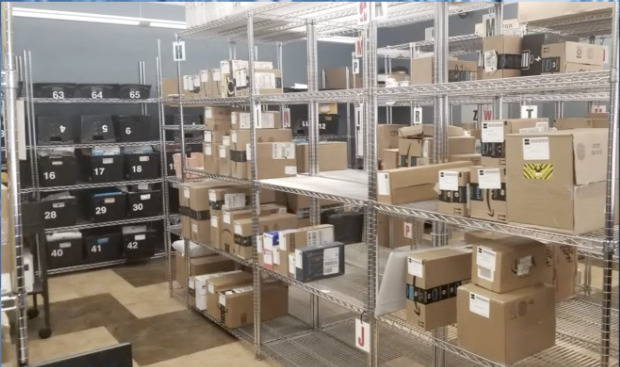
Before implementing package lockers, UNLV mailroom staff operated using a manual, paper-based system.
[su_quote]The desk assistants were like clerks at a post office. [/su_quote]
- Parcels arrived at a central location
- Staff manually logged each package
- Package shipped from a central location to individual delivery desks
- At each delivery desk, staff logged the packages again and placed paper notifications in student mailboxes
- If they checked their mailbox, students received a paper notification and picked up their package during operating hours
[su_quote]We had about 45 student workers at the time. Each one of them, at one point or another, would be involved in package management.[/su_quote]
From initial delivery to pick-up, each package took about 3.2 minutes to handle. With 6,500 packages arriving every month, UNLV staff was spending 240 hours every month on package delivery.
In other words, the university was spending $200,000 per year on package management.
What does the process look like with smart lockers?
With Smiota smart lockers and mailroom software, UNLV was able to streamline its package management system.
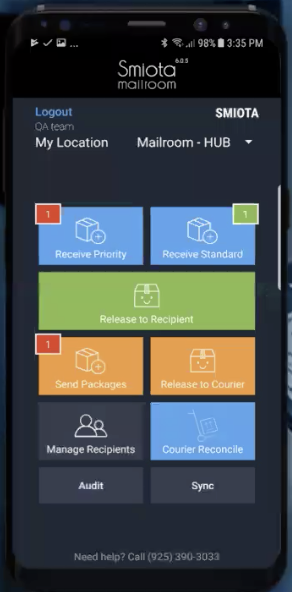
- Packages still arrive at a central hub, but now the staff use the Smiota Mailroom software for logging vs. a paper-based system
- Smiota’s simple point-and-scan system automates the chain of custody process and assists with sorting
- Employees deliver the packages to the smart lockers in each residence hall
- When a student has a package waiting for them in the locker, they are automatically alerted via text, email, and/or the Smiota app
- Students can pick up their package at their convenience
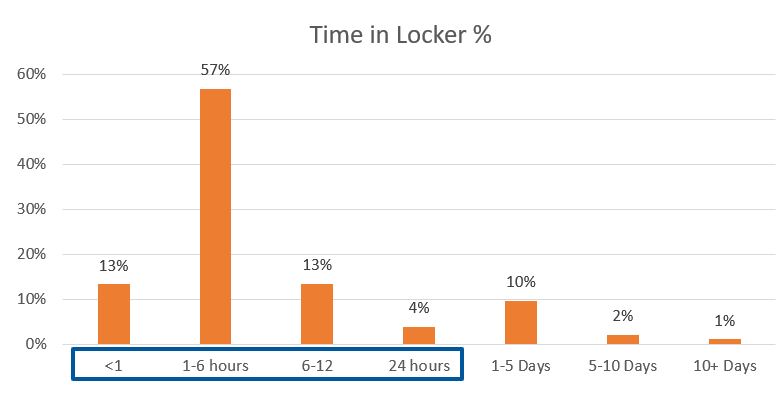
[su_quote]Before installing package lockers, it would take 10-18 hours for someone to get their packages. With the smart lockers….as I’m standing and putting packages in the lockers, I would have students coming down and getting packages within two minutes of me placing them in there.[/su_quote]
With smart lockers, it takes UNLV staff 13 seconds to handle each package, vs. the 3.2 minutes it took using the old paper-based system.
[su_quote]The training was simple. The students picked it up so quickly. Our student staff picked it up in the short training period. I even picked it up, which is amazing.[/su_quote]
What other benefits did the smart lockers provide?
Besides the time savings, UNLV realized some invaluable financial and organizational benefits after installing smart lockers.
- Students waiting to pick-up packages don’t have to adhere to delivery desk schedules — they can access their packages 24/7
- Desks are no longer double-staffed during peak package delivery and retrieval times
[su_quote]We had staff at the desks at 4 AM just to guard packages. Now, students don’t have to be up at 12 AM to 8 AM… that’s a plus.[/su_quote]
- Staff productivity has doubled
- With increased efficiencies, the university saved over $73,000 each year
- The customer service value of this type of experience for the students is priceless
[su_quote]We saved an enormous amount of money — we didn’t realize how much we’d save. I think we impressed the university with those numbers.[/su_quote]
What happened after you installed the smart lockers?
Installing smart lockers wasn’t the end of the story for UNLV — they wanted to use the new technology to help solve another problem.
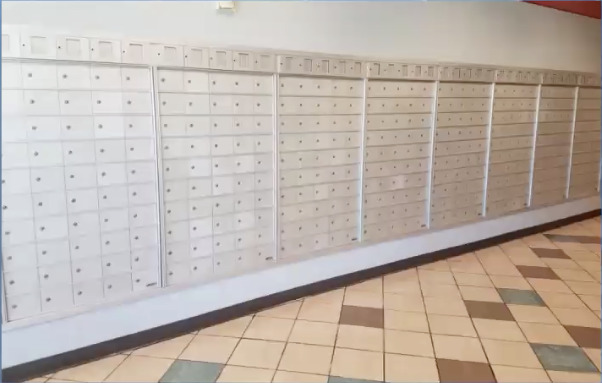
UNLV addressed ‘leaf mail’ with smart lockers
At UNLV, about one-third of the 1,800, or roughly 550, students never check their mail. Plus, the old mail lockers took up a ton of wall space and were managed by individual keys.
To help alleviate this problem, the university decided to use the new smart lockers to deliver leaf mail.
New leaf mail process with smart lockers
- All bulk mail (e.g., coupons and flyers) is sorted, approved to put out in the open for student pick-up, and recycled after a certain amount of time
- Mailroom staff puts a barcode on each piece of non-bulk leaf mail
- Mailroom staff scans and deposits mail into lockers
- Students are notified via text, email, and/or Smiota app that they have mail for pick-up.
- Mail that isn’t picked up after a three day expiration is pulled and returned to the mailroom — the locker system automatically notifies the students
How did this change the operation?
- It used to take five students all day to deliver all mail (leaf mail and packages) for 1,800 students
- Now it takes 4 hours max
—
Want to hear more insights about using smart lockers on college campuses and how leadership is navigating COVID-19-related challenges? Stream the full webinar by dropping your email in the form below.
The post The Impact of Smart Parcel Lockers on Campus: Pre- and Post- COVID-19 appeared first on Smiota.
]]>